Walk-In Shower vs. Bathtub: Which Is Right for Your Bathroom?
If you're planning a bathroom remodel, one of the biggest decisions you'll face is whether to keep your bathtub or replace it with a walk-in shower.
For some homeowners, a spacious tiled shower is the perfect upgrade. For others, keeping a bathtub makes more sense for everyday convenience, family needs, or future resale considerations.
At Rolling Hills Remodeling, we've spent over a decade helping homeowners throughout the Portland metro area improve their homes. One thing we've learned is that the best bathroom design isn't necessarily the trendiest option. It's the one that works for the people using it.
Before deciding between a walk-in shower and a bathtub, here are some important factors to consider.
1. Everyday Functionality: How Do You Use Your Bathroom?
The first question is simple: How do you actually use your bathroom?
Why Homeowners Choose Walk-In Showers
Walk-in showers have become a popular choice for bathroom renovations because they offer flexibility in both design and functionality.
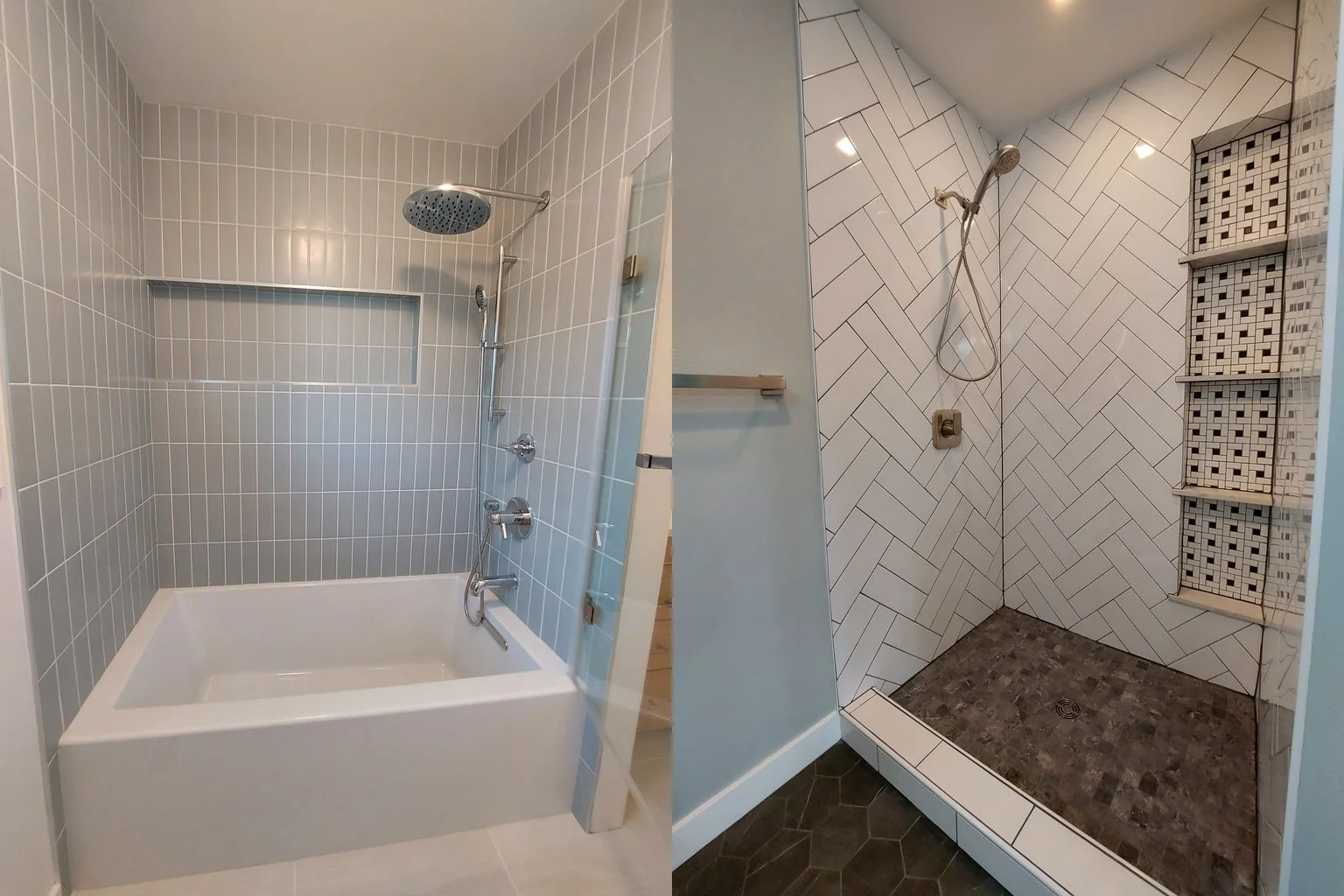
Depending on the available space, a custom tiled shower can include:
A larger, more comfortable showering area
Built-in niches for shampoo and other products
A shower bench or corner seat
Handheld shower fixtures
Frameless glass enclosures
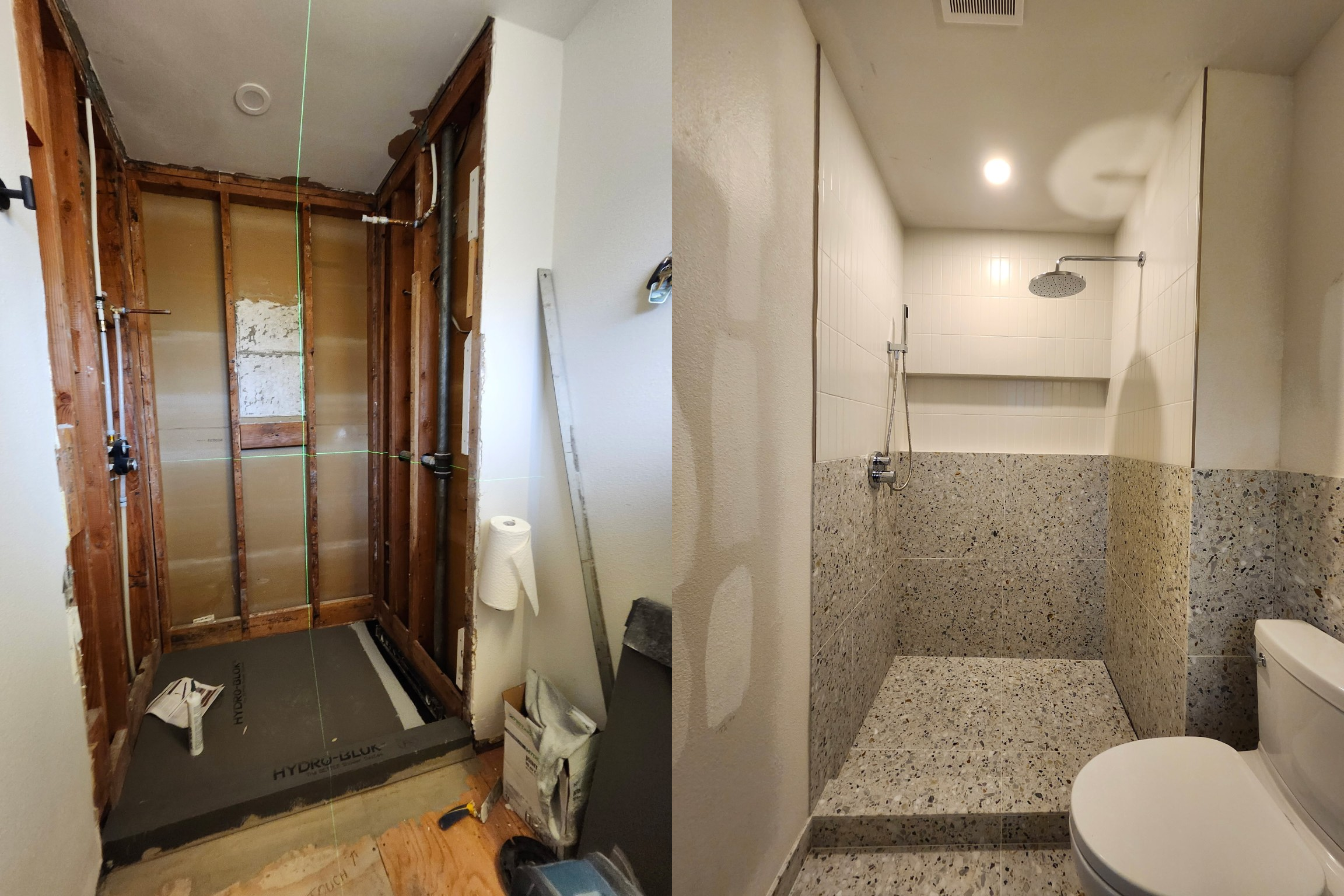
Curbless or low-threshold entry options
Replacing an existing bathtub with a shower can also make a smaller bathroom feel more open, particularly when using clear glass instead of a shower curtain.
For homeowners who rarely take baths, converting an existing tub into a walk-in shower may be a practical improvement.
Why Keeping a Bathtub Still Makes Sense
Bathtubs continue to serve an important purpose in many homes.
They're particularly useful for families with young children, homeowners who enjoy soaking, and households that want flexibility in how the bathroom is used.
A bathtub with a tiled surround can also provide a fresh, updated appearance without sacrificing the ability to take a bath.
Our recommendation: Think about how your household uses the bathroom today, and how those needs might change over the next several years.
2. Accessibility: Planning for Comfort and Safety
Accessibility is one of the strongest reasons homeowners consider replacing a bathtub with a walk-in shower.
Stepping over a traditional bathtub wall can become more difficult with age, limited mobility, or an injury.
A thoughtfully designed walk-in shower can reduce that obstacle.
Considering a curbless shower or a more extensive bathroom renovation? Learn what to expect during construction in our guide, “How Long Does a Bathroom Remodel Take?”
Low-Threshold and Curbless Showers
A traditional tiled shower typically includes a curb that helps contain water within the shower area.
A curbless shower eliminates that raised threshold, creating a more continuous transition between the bathroom floor and shower.
This can make entry easier for some users and provide a clean, modern appearance.
However, a curbless shower requires careful planning.
The shower floor must slope toward the drain, and the surrounding floor structure may need modification to accommodate the drainage system.
Waterproofing must also extend into the appropriate areas outside the immediate shower footprint.
Not every existing bathroom can accommodate a curbless shower without additional construction.
Other Accessibility Features Worth Considering
Even if you're not ready for a fully accessible bathroom, there are practical upgrades that can improve comfort and safety:
Handheld showerheads
Shower benches
Slip-resistant flooring
Properly installed grab bars or reinforced blocking for future installation
Wider shower entries
Conveniently positioned shower controls
It's important to remember that curbless doesn't automatically mean wheelchair accessible. True accessibility depends on the complete bathroom layout, clearances, fixture placement, and individual needs.
For homeowners planning to remain in their homes long-term, these considerations can be particularly valuable.
3. Resale Value: Should You Keep at Least One Bathtub?
One of the most common questions we hear is whether removing a bathtub will hurt a home's resale value.
The answer depends on the home and the buyers it may attract.
For example, a family with young children may consider a bathtub an important feature. A household without children may place greater value on a spacious, comfortable shower.
If Your Home Has Multiple Bathrooms
If another bathroom already has a functional bathtub, converting a secondary tub into a walk-in shower may offer a good balance.
You'll gain the shower you want while preserving a bathing option elsewhere in the house.
If Your Home Has Only One Bathroom
Removing the only bathtub deserves a little more consideration.
While a walk-in shower may better suit your lifestyle, some future buyers could view the absence of a bathtub as a disadvantage.
That doesn't mean you should automatically keep it. It simply means resale flexibility should be part of the decision.
Our recommendation: Don't remodel exclusively for a hypothetical future buyer, but consider whether preserving at least one bathtub makes sense for your household and property.
No particular shower or tub configuration guarantees a higher resale price.
4. Waterproofing: What Matters Behind the Tile
Whether you choose a tiled walk-in shower or a bathtub with a tiled surround, proper waterproofing is essential.
This is one of the most important parts of any bathroom renovation—and one of the least visible once the project is complete.
Tile and Grout Are Not the Waterproofing System
A common misconception is that tile and grout prevent water from reaching the structure behind them.
In reality, tile and grout are finish materials. They are not a substitute for a properly installed waterproofing system.
In a tiled shower, water management depends on the complete assembly, including the substrate, waterproofing, transitions, penetrations, and drain connection.
Waterproofing a Walk-In Shower
A custom tiled shower requires careful attention to:
Shower floor slope and drainage
Waterproofing at walls and floors
Inside corners and changes in plane
Shower niches and benches
Plumbing penetrations
The connection between the waterproofing system and drain
Curbless showers require additional attention to water containment and the transition into the surrounding bathroom floor.
Waterproofing a Bathtub Surround
A bathtub with tiled walls also needs a properly detailed water-management system.
Particular attention should be paid to the transition between the tub flange and the wall assembly, as well as plumbing penetrations, corners, and any built-in niches.
A bathtub doesn't eliminate the need for waterproofing simply because it contains the shower water at floor level.
At Rolling Hills Remodeling, we believe the quality of the work behind the finished tile is every bit as important as the tile itself.
A beautiful shower should also be built to perform reliably for years to come.
5. Cost Comparison: Walk-In Shower vs. Bathtub
Budget is another important consideration when deciding which option makes sense.
Based on Rolling Hills Remodeling's working pricing guide and representative project configurations, a typical shower or bathtub replacement may fall within a preliminary budget of:
Want a better understanding of overall renovation costs? Read our guide, “How Much Does a Bathroom Remodel Cost in Portland, Oregon?”, for a breakdown of common project budgets.
$8,000–$15,000
However, the final cost depends heavily on the configuration and materials selected.
Bathtub With Tiled Surround
A standard bathtub with a tiled surround may be a cost-effective option when the existing plumbing layout remains unchanged.
Costs typically include demolition, bathtub installation, plumbing fixtures, wall preparation, waterproofing, tile installation, and finishing details.
The bathtub itself is only one part of the overall project cost.
Custom Tiled Walk-In Shower
A custom tiled shower often involves additional labor and materials associated with constructing the shower floor, waterproofing system, curb, drain assembly, and glass enclosure.
Features such as niches, benches, premium tile, and multiple shower fixtures can increase the total.
Curbless Walk-In Shower
Curbless showers may cost more than conventional shower configurations because they can require additional floor preparation, structural considerations, specialized drainage, and expanded waterproofing.
The complexity depends on the existing floor system and bathroom layout.
Which Option Is Less Expensive?
There's no universal answer.
A straightforward bathtub replacement with a tiled surround may cost less than a highly customized walk-in shower. But a simple shower conversion may cost less than a bathtub renovation with expensive materials and extensive repairs.
The most reliable way to compare costs is to evaluate the actual scope of each option.
Want to explore the numbers for your bathroom?
Try our Bathroom Budget Builder to compare different shower and bathtub configurations and see how your selections affect your preliminary project budget.
6. Maintenance and Cleaning
Another consideration is how much maintenance you're comfortable with.
Walk-In Showers
A walk-in shower with large-format tile and fewer grout joints may be relatively straightforward to clean.
However, glass enclosures can develop water spots and mineral buildup, while grout and sealant joints require regular inspection and maintenance.
Bathtubs
A bathtub provides a continuous basin that can be convenient to clean, particularly when paired with a simpler wall surround.
However, the transition between the bathtub and surrounding walls still requires attention, and tiled surrounds need ongoing maintenance just like other tiled wet areas.
Neither option is completely maintenance-free.
Material selection, installation quality, water conditions, and routine care all affect long-term upkeep.
7. So, Which Should You Choose?
The right choice ultimately depends on your priorities.
A walk-in shower may be the better choice if:
You rarely use a bathtub.
You want easier shower entry.
You prefer a more open bathroom design.
You want custom features such as a bench or oversized niche.
Your home already has another bathtub.
Keeping or installing a bathtub may be the better choice if:
You have young children.
You regularly enjoy taking baths.
It's the only bathtub in your home.
You want the flexibility of both bathing and showering.
You prefer to maintain the existing bathroom configuration.
There's no single right answer for every homeowner.
A successful bathroom remodel should balance functionality, appearance, long-term durability, and a realistic budget.
Planning a Bathroom Remodel in Portland, Oregon?
Whether you're considering a tub-to-shower conversion, a custom walk-in shower, or a new bathtub with a tiled surround, Rolling Hills Remodeling can help you explore the possibilities.
We work with homeowners throughout Portland and the surrounding metro area to create bathrooms that combine thoughtful design, quality craftsmanship, and lasting functionality.
If you're still exploring options, start with our free Bathroom Budget Builder.
If you're ready to discuss your project, contact Rolling Hills Remodeling to request a consultation.
We'd love to help you create a bathroom that works for your home and the way you live.
Pricing reflects preliminary Rolling Hills Remodeling planning estimates as of November 2026. Actual costs depend on materials, existing conditions, project scope, and site evaluation.