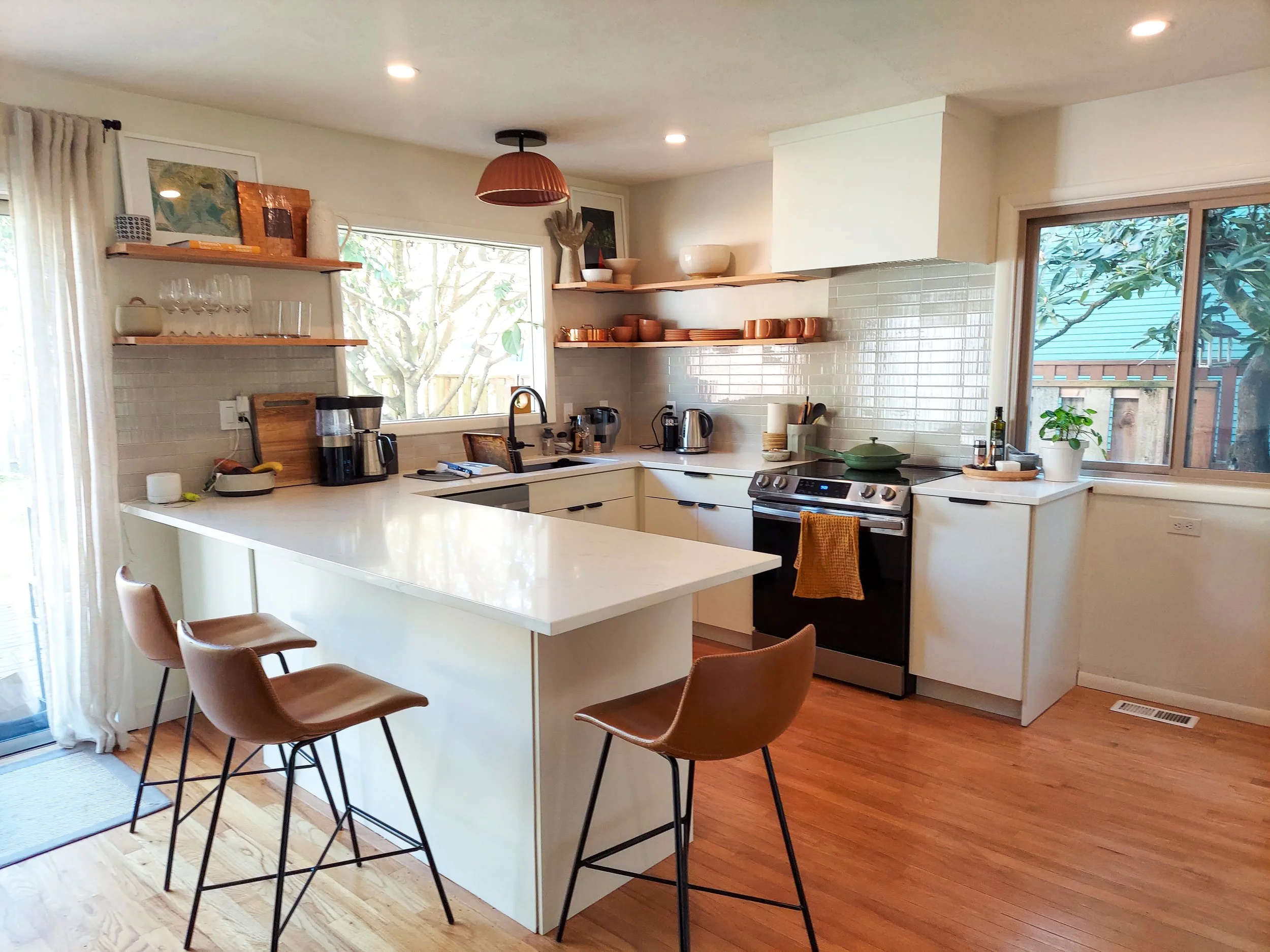
Kitchen Remodeling in Portland: Where Should You Spend Your Budget?
Planning a kitchen remodel is exciting, but it can also be overwhelming. Between cabinetry, countertops, flooring, appliances, lighting, and layout changes, there are countless decisions to make—and nearly all of them affect your budget.
One of the most common questions homeowners face is: Where should I spend more, and where can I save?
At Rolling Hills Remodeling, we've spent over a decade helping homeowners throughout the Portland metro area improve their homes. When it comes to kitchens, we believe the best renovations strike a balance between appearance, functionality, durability, and cost.
A beautiful kitchen is great. But if you're constantly walking around an island to reach the refrigerator, struggling to find counter space, or digging through poorly designed cabinets, that beautiful kitchen can quickly become frustrating.
Here's where we believe your kitchen remodeling budget makes the biggest difference.
1. Start With Layout and Functionality
Before selecting countertops, cabinet colors, or backsplash tile, consider how your kitchen actually works.
A kitchen serves two important purposes: it's a workspace where meals are prepared, and it's often a gathering space where family and friends spend time together.
A successful design should accommodate both without allowing one to interfere with the other.
Think About How You Move Through the Kitchen
Consider the everyday activities that take place in your kitchen.
Where do you prepare ingredients?
How far do you travel between the refrigerator, sink, and cooking area?
Is there enough counter space near your appliances?
Can someone open the dishwasher without blocking a major walkway?
Do family members regularly pass through your cooking area?
Can you comfortably reach the items you use most often?
These details might seem minor during the design process, but they can make an enormous difference once you're using the finished kitchen every day.
The traditional kitchen work triangle—connecting the sink, refrigerator, and cooking area—can be a useful starting point. However, modern kitchens often benefit from thinking in terms of activity zones rather than following a rigid formula.
For example, keeping frequently used utensils, cutting boards, and ingredients near your primary preparation area can make cooking more efficient.
Should You Change Your Existing Kitchen Layout?
Not necessarily.
If your existing kitchen layout already functions well, preserving it can help control remodeling costs.
Moving plumbing, electrical connections, appliances, or walls can add significant work to a renovation.
However, if the current layout creates daily frustration, those changes may be worthwhile.
Our recommendation: Keep the existing layout when it works. Change it when doing so provides a meaningful improvement to the way you use your kitchen.
There's little value in spending thousands of dollars on beautiful finishes if you're still going to dislike navigating the space every time you cook.
2. Don't Cut Corners on Cabinet Quality
If there's one area where we encourage homeowners to be especially thoughtful about quality, it's cabinetry.
Kitchen cabinets are among the most frequently used components in your home.
Doors are opened and closed, drawers carry heavy cookware, and cabinet interiors are exposed to years of daily use.
Poorly constructed cabinetry can develop problems long before the rest of the kitchen begins showing its age.
What Makes a Good Kitchen Cabinet?
When comparing cabinetry options, consider:
Cabinet box construction: The materials and assembly methods used to build the cabinet.
Drawer construction: The strength and durability of drawers, particularly those holding heavy cookware.
Hinges and drawer slides: Quality hardware contributes to smooth operation and long-term reliability.
Finish durability: Cabinet surfaces should withstand regular cleaning and everyday wear.
Storage configuration: Cabinets should provide practical, accessible storage rather than simply filling available wall space.
Expensive cabinetry isn't automatically better, and not every kitchen requires fully custom cabinets.
Well-constructed stock or semi-custom cabinetry can provide excellent value when properly selected and installed.
Storage Matters as Much as Appearance
Think about how often you use the contents of your cabinets.
Deep base cabinets can make it difficult to reach items stored in the back. Poorly positioned drawers can interfere with adjacent appliances. Inaccessible corner cabinets can waste valuable storage space.
Features such as deep drawers, pull-out shelves, pantry organizers, and thoughtful cabinet configurations can make a kitchen substantially easier to use.
Our recommendation: Prioritize durable cabinet construction and practical storage before spending extra money on decorative cabinet features.
3. Spend Wisely on Countertops and Work Surfaces
Countertops are one of the most visible features of a kitchen, but appearance shouldn't be the only consideration.
Your countertops need to accommodate food preparation, cleaning, appliances, and everyday household activities.
Choosing the Right Countertop Material
Popular options include quartz, granite, solid-surface materials, butcher block, and laminate.
Each offers different advantages in terms of durability, maintenance, appearance, and cost.
For example:
Quartz: Offers a wide range of styles and generally requires relatively little routine maintenance, though it still needs protection from excessive heat.
Granite: Provides a natural stone appearance, with maintenance requirements that vary by stone and finish.
Butcher block: Adds warmth and character but requires appropriate care, particularly around moisture.
Laminate: Can be a practical, budget-conscious option with a wide selection of finishes.
The most expensive material isn't necessarily the best choice for every household.
Counter Space Is More Important Than You Think
A beautiful countertop doesn't help much if you don't have enough usable space to prepare a meal.
Consider how countertop areas relate to your sink, cooking appliances, refrigerator, and storage.
If your kitchen frequently accommodates multiple people, having separate preparation and serving areas can help prevent congestion.
Our recommendation: Choose a durable material that fits your lifestyle, and prioritize usable work surfaces over unnecessary decorative features.
4. Lighting and Electrical: Small Details, Big Impact
Lighting is often treated as a finishing touch, but it plays an important role in kitchen functionality.
A kitchen needs sufficient illumination for food preparation, cooking, cleaning, and everyday activities.
Consider Multiple Types of Lighting
A well-planned kitchen may incorporate:
General lighting: Provides overall illumination throughout the room.
Task lighting: Illuminates work surfaces such as countertops, sinks, and cooking areas.
Accent lighting: Highlights architectural details, cabinetry, or decorative features.
Under-cabinet lighting can be especially useful because overhead fixtures may leave shadows on countertops where you're working.
Plan Electrical Locations Early
Outlet placement also deserves attention.
Think about where you regularly use coffee makers, mixers, air fryers, and other countertop appliances.
Poorly positioned outlets can create clutter and make work areas less convenient.
Depending on the renovation scope, electrical modifications may also require updates to meet applicable codes.
Our recommendation: Include lighting and electrical planning early in the design process rather than treating them as afterthoughts.
5. Appliances: Buy for How You Cook
Kitchen appliances are available with an enormous range of features and price points.
It's easy to get caught up in premium finishes, smart technology, and professional-style equipment.
But the best appliance package is the one that fits your cooking habits and available space.
Before spending more on appliances, consider:
How often do you cook at home?
How many people regularly use the kitchen?
Do you need additional oven capacity?
Is refrigerator storage a recurring problem?
Would a quieter dishwasher make a meaningful difference?
Are you paying for features you'll rarely use?
Appliance dimensions should be confirmed before cabinetry and countertop layouts are finalized.
A refrigerator with oversized doors or a range that doesn't fit the intended opening can create expensive complications.
Our recommendation: Choose reliable appliances that support your needs rather than allowing appliance features to dictate the entire remodeling budget.
6. Where Can You Save Money on a Kitchen Remodel?
Not every component of a kitchen needs to be premium.
In fact, making thoughtful decisions about where to save can allow you to invest more in the features that matter most.
Keep the Existing Layout When Practical
If your kitchen already functions well, retaining the locations of major appliances and plumbing fixtures can reduce unnecessary construction costs.
Choose Quality Stock or Semi-Custom Cabinets
Custom cabinetry can be an excellent solution for unusual spaces or specific design requirements.
However, many kitchens can be completed successfully with well-made stock or semi-custom cabinets.
Be Selective With Decorative Finishes
Backsplash tile, cabinet hardware, and decorative lighting can influence the overall appearance of your kitchen without requiring the most expensive available options.
A simple, well-executed design can be just as attractive as one filled with costly specialty finishes.
Avoid Unnecessary Structural Changes
Removing walls and creating open-concept layouts can dramatically transform a kitchen.
However, structural modifications may involve engineering, framing, electrical work, and additional finishing.
Before removing a wall, consider whether the change will meaningfully improve functionality or simply create a different appearance.
Make Material Selections Before Construction
Late changes can affect material orders, scheduling, and labor costs.
Making important decisions early helps establish a clearer scope of work and reduces the likelihood of unexpected expenses.
7. The Most Expensive Kitchen Remodeling Mistake? Designing a Beautiful Kitchen That Doesn't Work
It's easy to focus on how a kitchen will look in photographs.
Cabinet colors, countertop patterns, decorative lighting, and backsplash designs are all important parts of the finished space.
But those details don't determine whether the kitchen is enjoyable to use.
A poorly planned kitchen might have expensive countertops and beautiful cabinets while still suffering from:
Inadequate preparation space
Awkward appliance placement
Insufficient storage
Narrow or obstructed walkways
Poor lighting
Difficult-to-reach cabinets
Conflicting traffic patterns between cooking and gathering areas
These problems become especially noticeable when multiple people use the kitchen at the same time.
Imagine preparing dinner while family members gather around the island. If the refrigerator, dishwasher, and primary cooking area all compete for the same narrow walkway, even a large kitchen can feel cramped.
A successful design anticipates those everyday situations.
The goal isn't simply to create a kitchen that looks beautiful when nobody is using it. It's to create a kitchen that works beautifully when everyone is.
8. How Should You Prioritize Your Kitchen Remodeling Budget?
Every kitchen and household is different, but here's the order we generally recommend considering when planning a renovation.
Priority
Where to Focus
1. Layout and Functionality
Workflow, accessibility, clearances, and usable space
2. Cabinetry
Construction quality, hardware, and practical storage
3. Countertops
Durability, maintenance, and usable work surfaces
4. Lighting and Electrical
Task lighting, visibility, and convenient outlets
5. Appliances
Reliability, appropriate features, and correct sizing
6. Decorative Finishes
Backsplash, hardware, paint, and design details
This isn't a strict formula for allocating dollars.
It's a way of thinking about which decisions have the greatest effect on your everyday experience.
For example, a homeowner who loves cooking may prioritize a better preparation area and more functional storage. Another household may benefit most from improved traffic flow and a larger gathering space.
The best budget is one that reflects how you actually live.
9. Planning a Kitchen Remodel in Portland, Oregon?
Before beginning a kitchen renovation, take time to identify what's working in your current space and what isn't.
Think beyond finishes and consider the daily frustrations you'd like to eliminate.
A few useful questions to ask yourself:
What do I dislike most about my current kitchen?
Which features do I use most frequently?
Where do I need better storage?
Does the current layout accommodate multiple people?
Which improvements will make the biggest difference five or ten years from now?
Answering these questions can help establish priorities before you begin choosing materials or requesting estimates.
Build a Kitchen That Works for You
At Rolling Hills Remodeling, we believe a successful kitchen renovation should combine thoughtful planning, durable materials, quality craftsmanship, and a realistic budget.
Whether you're updating an existing kitchen or considering a more extensive renovation, the goal should be the same: creating a space that's comfortable, functional, and built around the way you live.
We provide residential remodeling services throughout Portland and the surrounding metro area, helping homeowners make informed decisions about their projects.
Ready to discuss your kitchen renovation?
Contact Rolling Hills Remodeling to request a consultation and tell us more about your project.
We'd love to help you create a kitchen that works as well as it looks.