The Hidden Cost of Finding a Contractor: Who Really Pays for Lead Generation?
Online contractor-matching services promise to make finding a professional easier. But behind those convenient connections are costs that homeowners rarely see—and may ultimately help pay for.
When "Free" Isn't Really Free
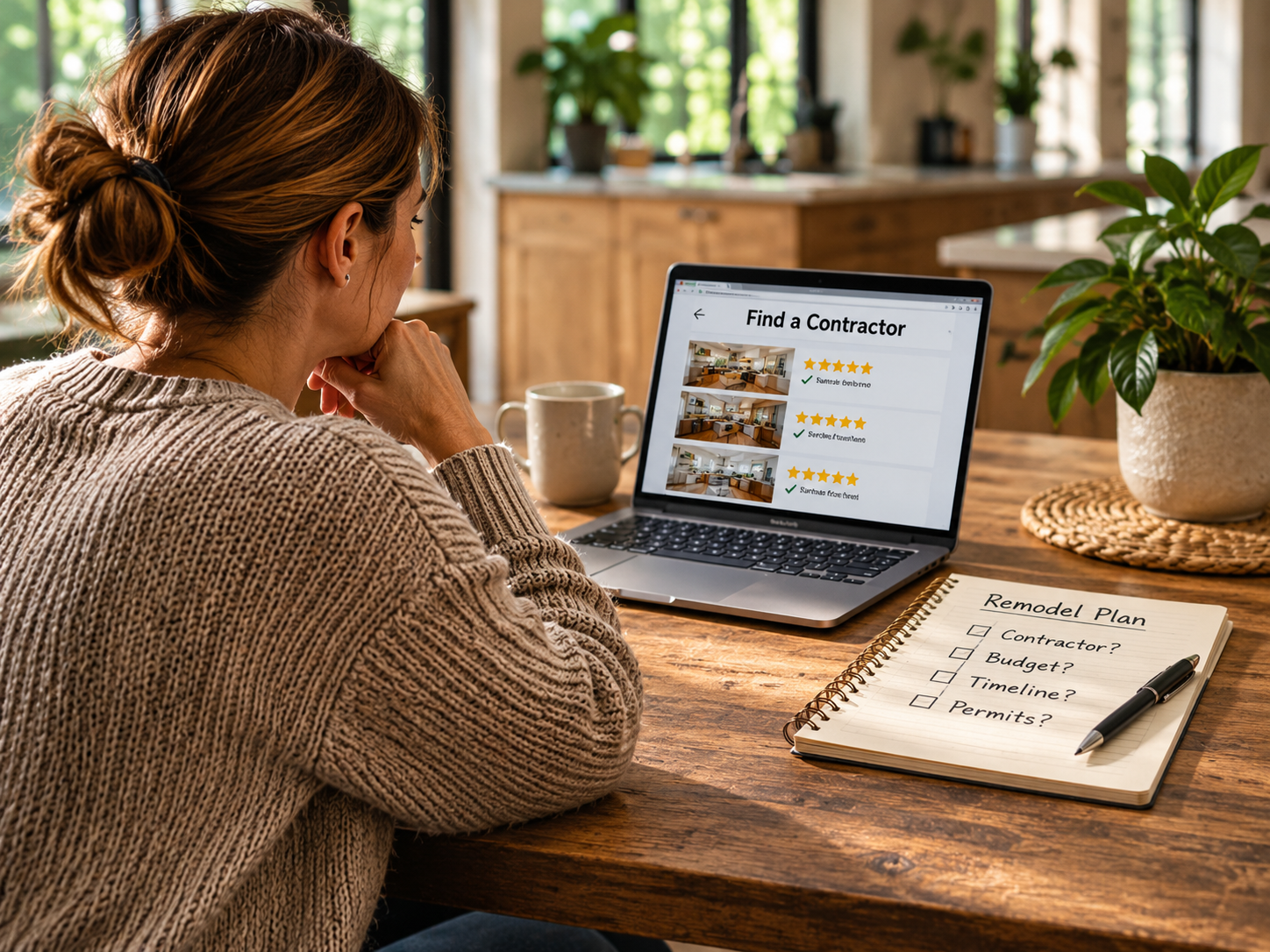
If you've ever used a website like Angi (formerly Angie's List) or Thumbtack to find a contractor, you probably didn't think much about what happened behind the scenes.
You described your project, entered some contact information, and were connected with local professionals interested in your work.
Simple enough. And best of all, it was free.
Or was it?
I've worked in residential remodeling for more than 12 years, and I've had conversations with homeowners who were genuinely surprised to learn that contractors often pay for those introductions.
When I've explained what a lead from one of these services can cost, the response is usually something like, "Really? I thought that service was free."
And from the homeowner's perspective, it was. They weren't charged to submit their project information or request an estimate.
But that doesn't mean the connection came without a cost.
Someone is paying for that introduction. And understanding how those costs work can help homeowners make more informed decisions about their remodeling projects.
How Contractor-Matching Services Work
Companies like Angi and Thumbtack provide a legitimate service. They help homeowners find professionals and give contractors opportunities to connect with potential customers.
For homeowners, that convenience can be valuable. Instead of spending hours researching local businesses, they can describe their project and receive responses from interested contractors.
For contractors, these platforms offer access to customers they might not otherwise reach.
But these companies are businesses, and they need to generate revenue.
Depending on the platform, contractors may pay for individual leads, advertising, subscriptions, or other forms of access to prospective customers.
Some introductions are offered to multiple contractors, meaning several businesses may pay for the opportunity to compete for the same project.
Here's the important distinction:
A contractor isn't necessarily purchasing a customer. They're purchasing an opportunity to compete for one.
And paying for that opportunity doesn't guarantee a signed contract.
What Happens When Multiple Contractors Pay for the Same Lead?
Imagine a homeowner submits a request for a bathroom remodel.
Five contractors are interested in the project, and each pays $200 for the opportunity to connect.
That's $1,000 collected from a single homeowner inquiry.
Now consider what happens next.
Perhaps two contractors schedule appointments. Another discovers the project isn't a good fit. One never receives a response. The fifth prepares an estimate, but the homeowner ultimately decides to postpone the renovation.
No project gets completed.
No contractor earns revenue.
But the contractors have collectively spent $1,000 pursuing the opportunity.
This is a hypothetical example, and actual pricing and lead-sharing arrangements vary between platforms.
Still, it illustrates an important distinction between generating leads and generating business.
For contractors, those are two very different things.
A Lead Isn't Necessarily a Customer
Homeowners begin researching remodeling projects at different stages.
Some are ready to hire a contractor. They have an established budget, a realistic timeline, and a clear understanding of what they want.
Others are simply exploring possibilities.
They might be curious about what a bathroom remodel costs, comparing design ideas, or wondering whether a renovation is financially realistic.
There's absolutely nothing wrong with that. Research is an important part of making a major financial decision.
But from a contractor's perspective, those inquiries have very different values.
A homeowner who's ready to begin a $30,000 renovation represents a potential project.
A homeowner who's casually exploring ideas might not be ready to hire anyone for another two years.
Yet depending on the platform, both inquiries may generate charges for contractors.
That raises a reasonable question:
If a company earns money by generating contractor leads rather than completed projects, how closely are its financial incentives aligned with producing qualified customers?
A platform can provide a valuable introduction without guaranteeing a sale. That's a reasonable business arrangement.
But the number of connections a platform generates isn't necessarily a measure of how many successful projects result.
The Cost of Acquiring One Customer
Let's take the example a step further.
Imagine a remodeling contractor purchases 10 leads at $100 each.
That's $1,000 spent connecting with potential customers.
Of those 10 inquiries, perhaps five result in conversations, three become appointments, and one turns into a signed contract.
The contractor didn't spend $100 acquiring that customer.
They spent $1,000.
And that doesn't include the time spent answering questions, visiting properties, preparing estimates, and following up.
Now imagine that customer hires the contractor for a $20,000 bathroom remodel.
Before work begins, the contractor has already spent the equivalent of 5% of the project's value acquiring that customer.
Where does that money come from?
Marketing Expenses Don't Disappear
Every legitimate remodeling company has operating expenses beyond the physical work performed.
Insurance, licensing, vehicles, equipment, employee wages, administrative expenses, and countless other costs are part of running a business.
Marketing is another expense.
And like every other business expense, it must be accounted for when determining what to charge customers.
That doesn't mean a contractor adds a specific lead-generation fee to every estimate.
Most marketing costs are incorporated into a company's overall overhead and pricing structure.
But a contractor who spends thousands of dollars every month acquiring customers must generate enough revenue to support those expenses.
Otherwise, the business isn't financially sustainable.
The more expensive it becomes to acquire customers, the more pressure there is to recover those costs through project revenue.
Not every marketing expense results in a higher bid. Some contractors absorb those costs through reduced profits, while others benefit from increased efficiency or additional work.
But sustained acquisition expenses cannot simply be ignored.
And that brings us back to the homeowner who thought their contractor-matching service was free.
They may not have paid the platform directly.
But the contractors competing for their business had to account for those expenses somewhere.
A New Approach: Paying a Percentage of the Project
Some marketing platforms use a different approach.
Rather than charging contractors upfront for individual leads or advertising, they offer to generate customers in exchange for a percentage of revenue from completed projects.
On the surface, this can sound attractive.
The contractor avoids paying for unsuccessful leads and only pays when actual business is generated.
But consider a hypothetical agreement in which a marketing company receives 10% of project revenue.
On a $30,000 bathroom remodel, that amounts to $3,000.
If the contractor expected to earn $8,000 after covering direct project costs, the commission would consume $3,000 of the amount available for overhead and profit.
The contractor must either absorb that reduction, adjust pricing, or determine that the project isn't financially worthwhile.
There can be legitimate advantages to performance-based marketing. Contractors may reduce upfront financial risk, and marketing companies have an incentive to produce paying customers rather than inquiries alone.
But the underlying question remains the same:
How much should it cost to connect a homeowner with a contractor?
Are We Making It More Expensive to Find Each Other?
There's another development I've watched over the years.
Search for a remodeling contractor online, and you may find that some of the most prominent results aren't remodeling companies at all.
They're directories, advertising platforms, and contractor-matching services.
Rather than connecting directly with a local contractor, homeowners may be encouraged to begin their search through a third party.
Those platforms may then charge contractors for access to the very customers searching for their services.
Search results vary by location, advertising competition, and the specific terms used. And these platforms have every right to advertise.
But their growing role raises an interesting question about the home improvement industry.
We've created an enormous marketplace around helping homeowners and contractors find each other.
The companies operating that marketplace can earn revenue through advertising, subscriptions, lead fees, premium placement, and project commissions.
Those expenses become part of the economics of residential construction.
Are we making it more expensive for homeowners and contractors to find each other than it needs to be?
It's a question worth considering.
What Can Homeowners Do Differently?
None of this means homeowners should avoid contractor-matching websites entirely.
They can be useful tools, particularly when you're unfamiliar with local contractors or need help finding professionals for specialized work.
But they shouldn't be your only resource.
Start with personal recommendations. Ask friends, family, neighbors, and coworkers about contractors they've hired. A firsthand recommendation can provide valuable insight into workmanship, communication, reliability, and the overall experience.
Research local businesses directly. Look for established contractors in your area. Explore their websites, project portfolios, customer reviews, and business information.
Understand the difference between advertising and reputation. A company appearing prominently in search results doesn't necessarily mean it's the most qualified contractor for your project. Advertising visibility and professional competence are two different things.
Contact contractors directly when possible. If you find a company whose work interests you, visit its website or call its business number. You don't necessarily need a third-party platform to make the introduction.
Verify qualifications. Check licensing, insurance, references, and any other credentials appropriate for the work. In Oregon, homeowners can verify contractor licensing through the Construction Contractors Board.
Compare value rather than simply comparing prices. A quality remodeling estimate should account for materials, labor, project management, craftsmanship, and the contractor's ability to deliver what they've promised.
And remember that a contractor's willingness to pay for advertising tells you very little about the quality of their work.
Good contractors use these platforms. So do inexperienced contractors. The platform itself isn't a substitute for researching the business you're considering hiring.
A Question of Transparency
After more than a decade in residential remodeling, I've watched contractor lead-generation services evolve from relatively inexpensive networking tools into a significant marketing expense for some businesses.
I've participated in that system. I've paid for leads, pursued projects that never materialized, and experienced firsthand how those expenses affect the cost of operating a remodeling company.
I also recognize that these platforms provide a legitimate service.
They help homeowners find professionals and give contractors opportunities to grow their businesses.
But I believe homeowners deserve to understand how those connections are funded.
When you request a contractor through a third-party service, you may be initiating a transaction that costs one or more businesses money, regardless of whether you hire anyone.
And when contractors consistently pay substantial amounts to acquire customers, those costs become part of the financial equation behind their pricing.
That doesn't mean every homeowner pays more because they used a matching service.
It means the cost of connecting homeowners and contractors is a real business expense, and one that deserves more attention than it typically receives.
The Bottom Line
The home improvement industry depends on trust.
Homeowners trust contractors to provide fair estimates, perform quality work, and communicate honestly.
Contractors trust that the time and resources they invest in pursuing projects will eventually support a sustainable business.
And increasingly, both parties rely on third-party companies to help establish those relationships.
There's nothing inherently wrong with that arrangement.
But convenience isn't free simply because the homeowner never receives a bill.
As the cost of connecting homeowners and contractors continues to evolve, it's worth asking whether those services are making home improvement more accessible—or simply adding another layer of expense to an already costly process.
Because when it comes to remodeling, the price of finding a contractor can become part of the price of hiring one.
About the Author: Rolling Hills Remodeling is a Portland-area residential remodeling company with more than 12 years of experience helping homeowners improve their living spaces.